
Let's break from the news of the Dream World for a moment to look at some headlines in the Awake World.
Two men were sentenced to death by the Chinese government today for producing milk containing melamine, a chemical used in making plastics and fire retarders. The milk was fed to young children, resulting in at least six fatalities with some 300,000 more children becoming ill form the tainted milk. The condemned men, Zhang Yujun and Geng Jinping, are alleged to have added the melamine to the formula milk to make it appear to have a higher protein content. Another collaborator, Zhang Yanzhang, was also given a sentence of life in prison for her participation in the process, and three others have been handed jail sentences of 5 to 15 years with more awaiting trial.
Makes you angry, doesn't it? That a group chemical and food manufacturers would come up with a scheme to falsely beef up infant formula to satisfy government nutrition guidelines. What makes me angry is that the same government that created these guidelines is the same government that ran Sanlu Group, the company that produced the milk. They are also the same government that put the Sanlu employees on trial and they are same government that will pull the trigger when it is time for Zhang Yujun and Geng Jiping to die.
Here in the West, we are often quick to criticize China. In this respect the media has had a year of field-days with China's inept handling of the Sichuan earthquake last May, government repression of protests against the country's continued occupation of Tibet leading up to the Summer Olympics, and then there was hubbub around Chinese-made lead-tainted toys just before the holiday shopping season. Now this thing with the milk and we in the West shake our heads.
 But the West is certainly no stranger to messing with milk. There are of course the recent problems with rBGH, Monsanto's genetically engineered hormone that's been banned in Europe but is fed to dairy cows (and, by extension, to people) in the United States. Back in the 1970s there was an uproar against the multinational food giant Nestlé for marketing infant formula to women in developing nations, purporting it to be superior to a mother's own breast milk. The switch to Nestlé's formula resulted in a spike in infant mortality rates all over Africa. A consumer boycott ensued but did little to hold the corporation accountable and three decades later it's still in effect. Nestlé also had its own recent melamine milk scandal in China, which is reported to have sickened over 90,000 people. You can read a Chinese news story about that here.
I'll get to our dream in a sec. I just want to know: what will killing Zhang Yujun and Geng Jinping do to rectify the situation? How does killing two men teach China, and the rest us, that killing is wrong? And who will hold the Chinese government—and all the world's governments and the corporations that share their status—accountable for the actions that have killed far more than six infants and poisoned not thousands, but millions of people?
All of this could have been avoided if we humans admitted that we were mammals and actually breast fed our kids like we're supposed to. But enough about milk—let's clear our pallets with some cookies! This dream comes from Paolo in Philadelphia:
I was wandering through a vast warehouse, the size of a Costco, but of a more pallid gray color, and dimmer. Each aisle rack was several stories high, and each shelf was filled with boxes and clear plastic bins of vegan cookies. There were chocolate cookies, hazelnut cookies, vanilla cookies, sugar cookies, big cookies with designated icing packs, frosting kits, add-ons of every sugary candy imaginable, all labeled with their ingredients next to the price. As I struggled to comprehend the sheer volume of cookies, I picked out individual bulk bin cookies and put them in my hand-held shopping basket (red). On the ends of the aisles were pre-made, unrefrigerated vegan pizzas, in pizza display boxes (white cardboard with cellophane cut outs to show texture), and 22oz bottles of dark beer. Various other shoppers came in (most seemed to have some fraternity or sorority affiliation via hoodies, caps, etc) and picked out cookies, pizza, and beer. I checked out, and as I walked out of the store I woke up. I jumped out of bed (for real) and immediately ate 2 cookies. It was good.
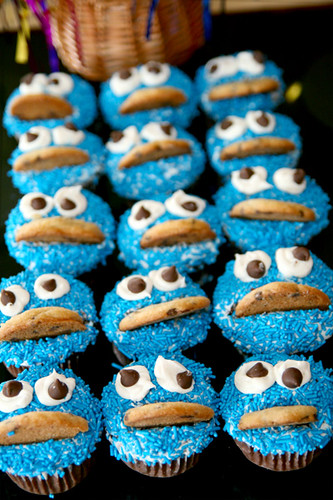 Paolo, do you have a utopian dietary vision for society? If you do, then your dream would seem to situate you in a post-utopian future where you have worked hard to fulfill your desires and yet they have been co-opted by consumer culture. Now everyone wants eggless macaroons and dairyless pizza enough to warrant big box stores that carry nothing but the stuff. The ingredient list has changed, but the culture of consuming it (frat boys and beer) is still the same. You seem to be cool with that—less work for you in fighting the vegan revolution, right? I could be wrong. Anyway, when you finally woke up and ate those cookies, I cheered for you. I even went and ate a cookie myself. Was it vegan? You bet! ¡Viva la revolución!
––––– –– ––– –––––
Book of the day: Vive le vegan! Simple, Delectable Recipes For the Everyday Vegan Family. It has recipes for the cookies you want right now.


 Posts
Posts


